Bank Linking & Data Sharing Consent –Redesign
Role: Senior Product Designer
Platforms: Mobile + Web
Company: Tarabut (Open Banking Platform)
Duration: 3–4 months
1. Overview
I led the complete redesign of the bank linking and data-sharing consent experience for an open banking platform used across multiple GCC banks. The goal was to simplify the journey, increase trust, and improve conversion while staying fully compliant with each bank’s regulatory and technical constraints.
This redesign became one of the largest and most impactful projects in the product, influencing how users link their bank accounts and approve access to financial data across the region.
2. The Problem
Before the redesign, the bank-linking flow faced several challenges:
Users didn’t clearly understand what data they were sharing and why.
High drop-offs occurred at the consent screen.
Banks had different mandatory requirements, leading to inconsistent user experiences.
The legal text was long and intimidating.
The design lacked the trust and clarity expected in a financial interaction.
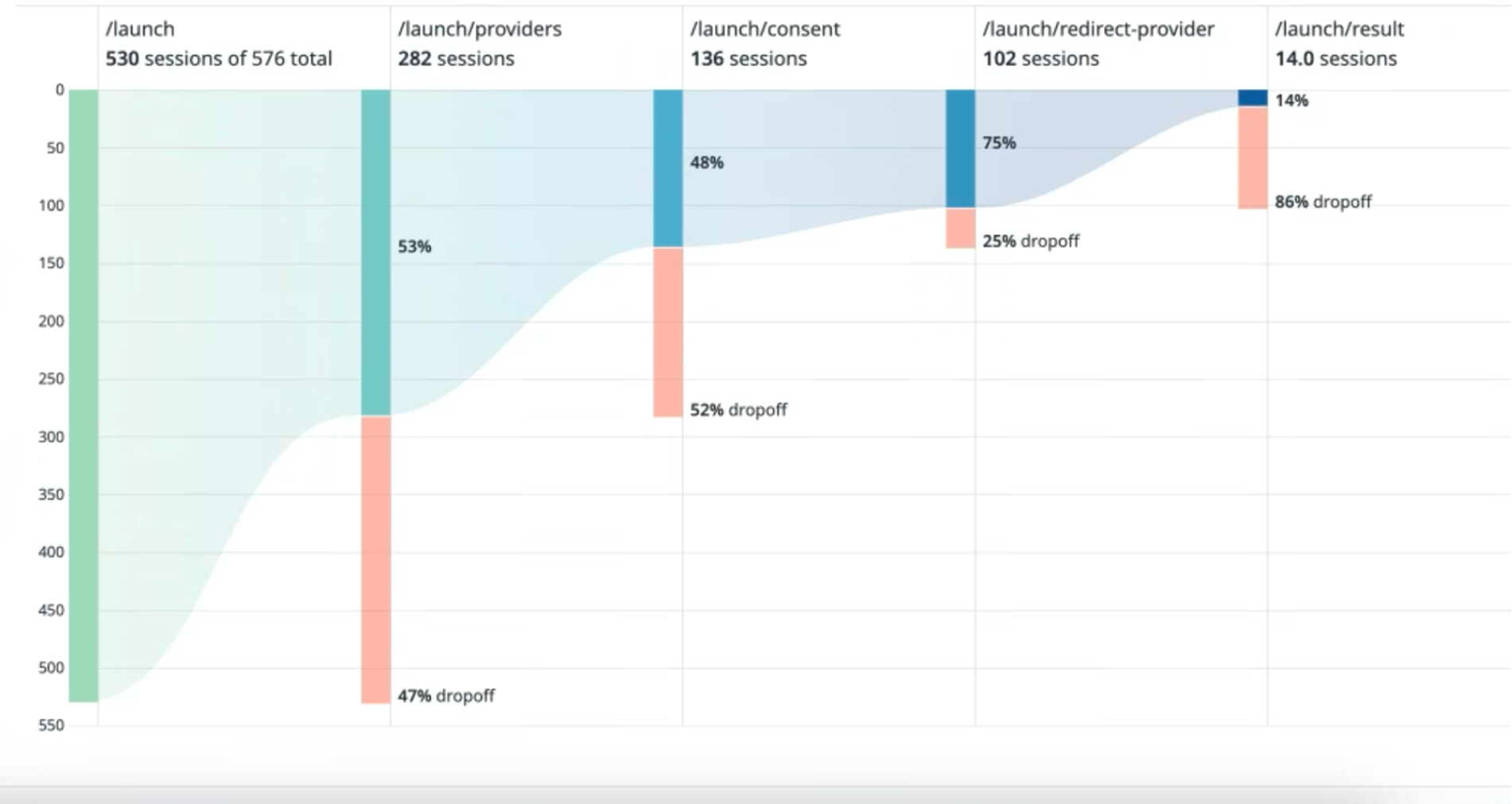
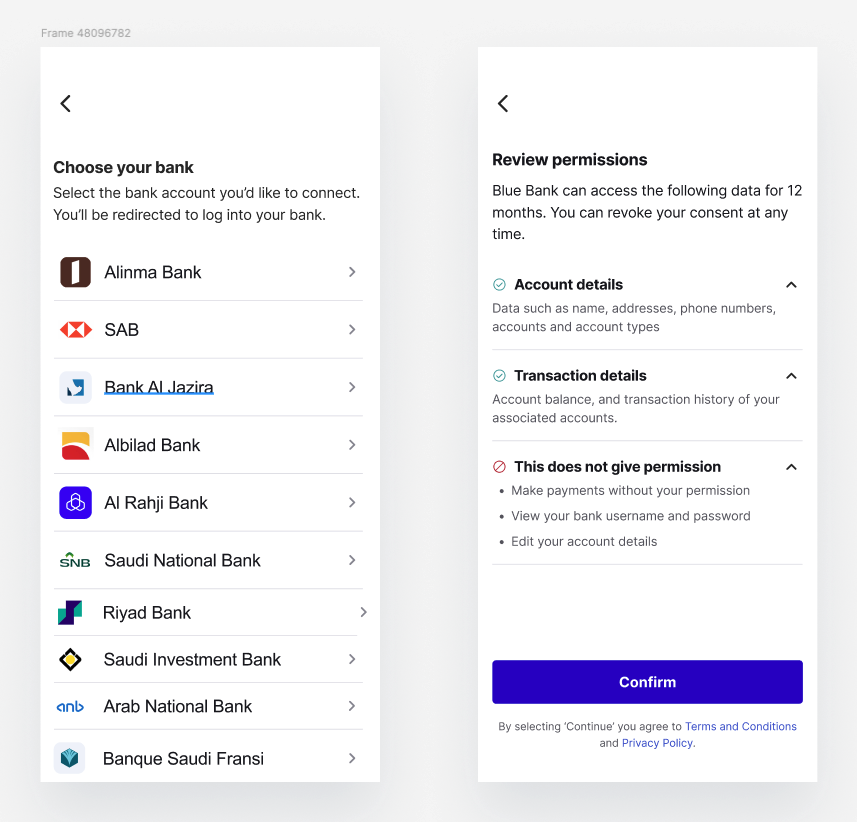
As a result, conversion rates were lower than expected, and onboarding new banks took longer due to inconsistent UX patterns.
3. Goals & Success Metrics
Primary Goals
Improve understanding of the consent step
Reduce drop-offs during bank linking
Increase user trust
Create a scalable experience adaptable to multiple banks
Improve the speed of onboarding new financial institutions
Success Metrics
Higher completion rate
Fewer user errors and fewer customer support complaints
Shorter time to complete linking
Faster internal integration for new partner banks
4. My Role & Responsibilities
As the Senior Product Designer, I led:
UX research & journey analysis
Competitive benchmarking
Concept creation (3 different design directions)
Wireframing & final product design
Usability testing (new + returning users)
Collaboration with Compliance, Engineering & Product
Establishing scalable, reusable UX patterns for partner banks
5. Research & Analysis
User Journey Breakdown
I mapped the entire flow from bank selection → authentication → data sharing, → successful connection.
Key findings included:
Long legal paragraphs created hesitation
Users struggled to understand what exactly they were granting access to
Some banks required additional fields, breaking the consistency
Confusion when selecting multiple accounts
Lack of trust cues during sensitive steps. This analysis guided the redesign decisions.
6. Concept Exploration
Before moving into the final solution, I designed three different concepts, each solving the problem from a different angle:
Concept A – Simplified Consent
Focused on breaking down permissions into small, digestible parts with clear explanations.
Concept B – Visual Clarity & Trust
Introduced strong visual hierarchy, trust elements, and better spacing to improve readability.
Concept C – Reduced Steps
Explored a shorter, more guided journey to minimize friction.
These concepts helped the team choose the right direction before committing to the final UI.
7. Final Design Solution
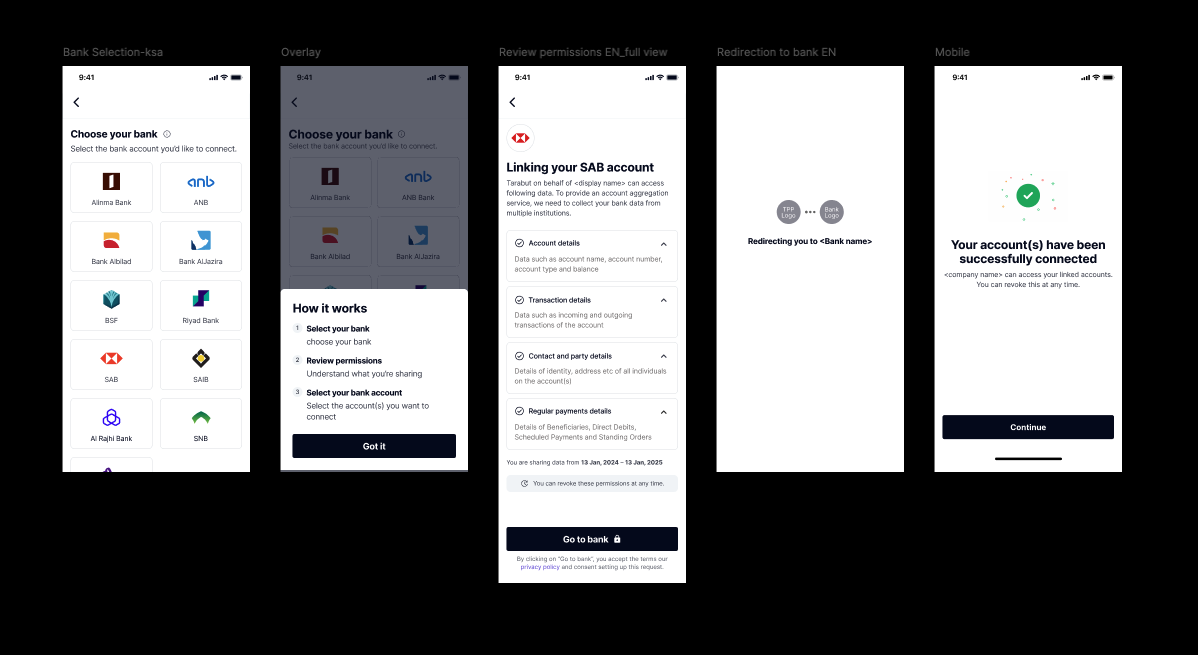
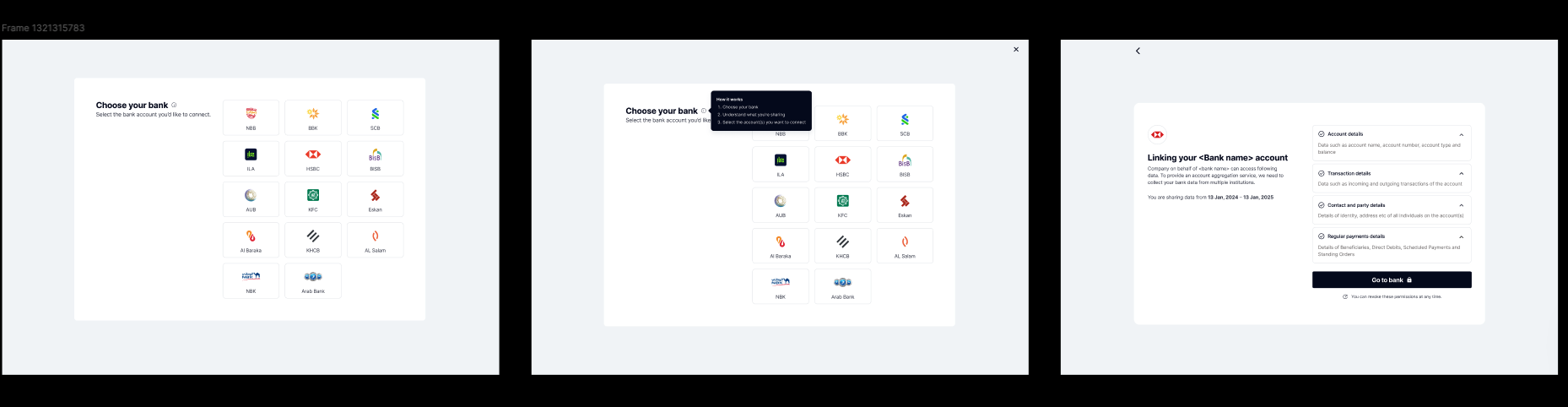
The final solution combined the strongest elements from each concept:
Clear hierarchy of steps
Simplified and humanized consent language
Structured permissions with short explanations
Scalable layout adaptable for different banks
Better indication of progress
More intelligent handling of multi-account selection
Unified design patterns across the entire flow
Flow diagram
Parts of the UI blurred
Icons or wireframe shapes
High-level screens without text
8. Usability Testing
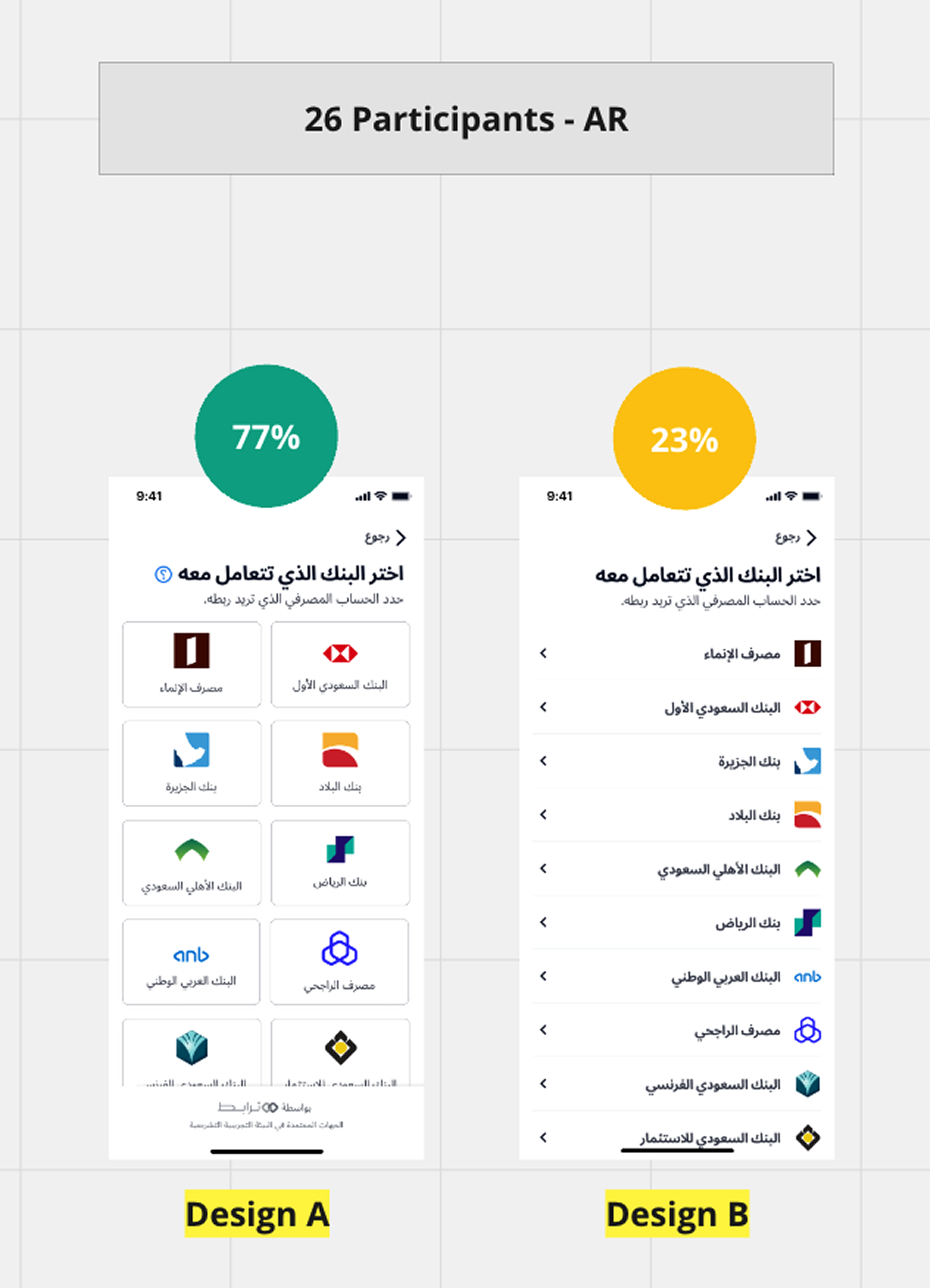
We ran comparative usability testing between the previous design and the new redesigned flow.
The results were clear:
• 77 percent of participants preferred the new experience.
• Users completed the journey faster and with fewer questions.
• The consent screen became significantly easier to understand.
Key Results
Users understood permission types faster
Legal text became less intimidating
Trust increased significantly
Users completed the flow with fewer questions
Hesitation at the consent step decreased
9. Impact & Results
The redesign produced measurable improvements:
+27 percent increase in completion rate
Noticeable drop in consent-screen abandonment
Faster onboarding of partner banks due to reusable UX patterns
Better user comprehension and fewer support tickets
Higher user trust during financial interactions
10. Future Opportunities (Concepts Explored)
These are advanced ideas I explored but intentionally kept out of the final release:
Voice or AI-assisted bank search
“Powered by SAMA” trust indication
Icons explaining each permission
Dynamic account selection based on use case (salary, transfers, payments)
Displaying balance & currency for clarity
AI or a human help assistant during the flow
Smart ordering of banks (trending → recent → alphabetical)
Personalized experience for returning users
These ideas can be revisited in future iterations.
11. Final Takeaway
This project was not about redesigning two screens.
It was about redesigning trust, clarity, and consistency in one of the most sensitive financial journeys.
The work created a foundation that scales across multiple banks and markets, improves user confidence, and accelerates open banking adoption.