Case study 01 · Islamic lifestyle
Sila صِلة
A daily companion that stays quiet until it matters.
Prayer times, the Quran, adhkar, qibla and prayer tracking in one Arabic-first app, built natively for Android and iOS, with no sign-up, no ads and no data leaving the phone.
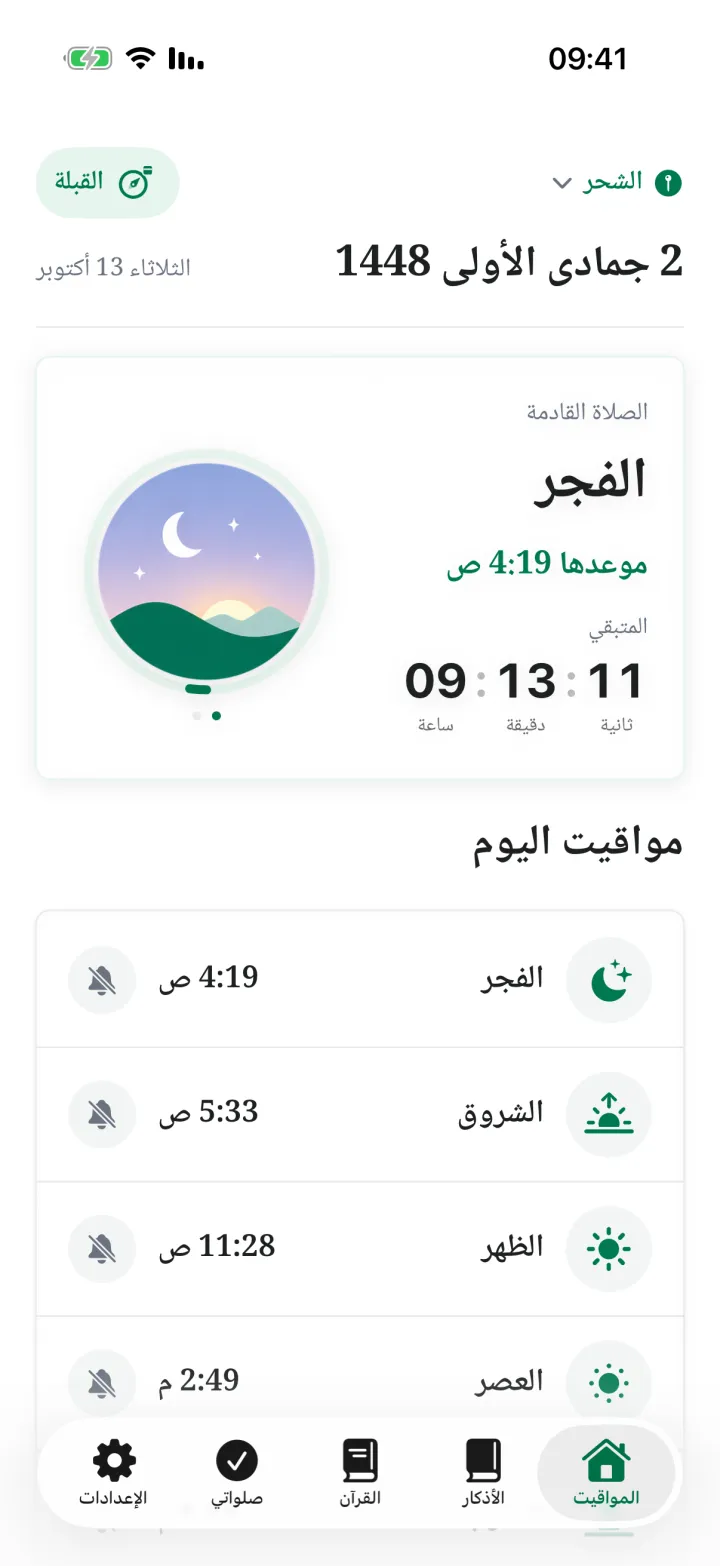
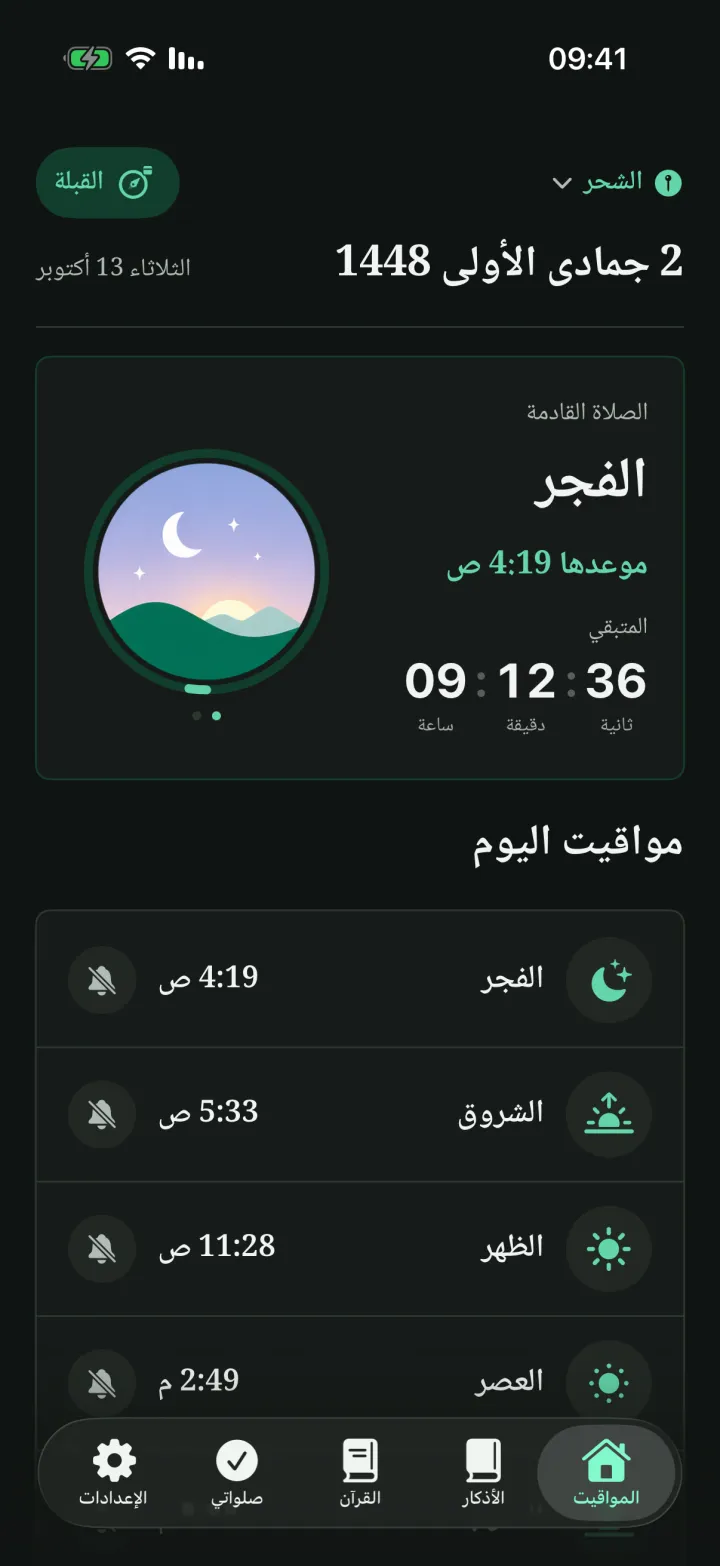
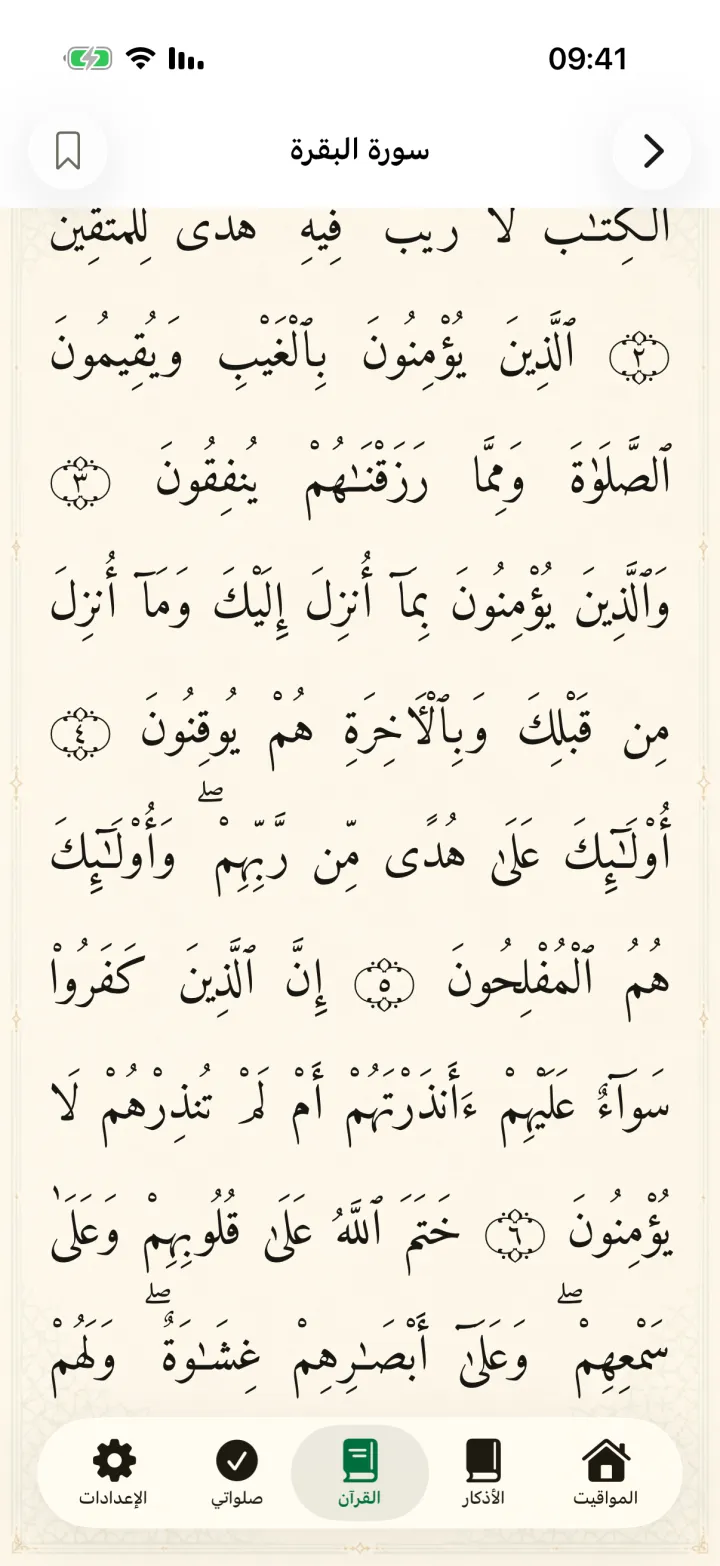
- Role
- Founder · product designer · product lead
- Platforms
- Android · iOS · iPadOS · home-screen widgets
- Technology
- Native Android (Kotlin) · native iOS (Swift)
- Status
- Live on Google Play and the App Store
The opportunity
Five moments a day deserve better than a cluttered app.
A Muslim's day is organised around five prayers, plus Quran reading and remembrance (adhkar) in the morning and evening. The tools for this are usually spread across several apps, or packed into one app that also carries feeds, ads and sign-up walls.
The use pattern is unusual for a consumer product: very short, very frequent visits, often at dawn or late at night, and almost always with one question in mind: how long until the next prayer?
Existing alternatives
Large all-in-one Islamic apps
Comprehensive, but often busy, ad-supported or account-driven. The next prayer competes with everything else on the screen.
Single-purpose apps
A prayer-times app, a Quran app and an adhkar app each do one job, but the user has to stitch the day together.
The phone's own clock and alarms
Reliable, but they don't know prayer times, the Hijri calendar or the qibla.
The design opportunity
Design one calm product around the daily rhythm itself: put the next prayer first, keep every other practice one tap away, and make reliability and privacy part of the experience rather than settings.
My ownership
One person accountable for every layer, from idea to store listing.
Sila is my own product. I defined it, designed it, directed its implementation on two native platforms with AI coding agents, tested it on devices and released it. The agents wrote most of the code; the decisions, reviews and the final experience were mine.
What I led
- Product definition, scope and release planning
- Information architecture and the five-tab structure
- Visual design, the prayer-scene illustration system and dark mode
- Arabic-first content hierarchy, then the English localisation
- Notification and widget behaviour on each platform
- Device QA, design QA against references, and store releases
What AI-assisted tools contributed
- Implemented both native apps from my specifications
- Proposed options for the harder platform features, which I chose between
- Ran the checks I asked for before each release
What stayed under my direction
- Choosing native over cross-platform, and what each platform should do differently
- Reviewing output and rejecting what broke the design or the content
- Content sourcing and licensing: Quran text, adhkar and adhan recordings
- Every release decision and every store submission
- Android Studio
- Xcode
- Claude Code
- Codex
- Android emulators & iOS simulators
Discovery & design decisions
Designing for the two-second glance.
Most visits to Sila last a few seconds. Each of these decisions came from asking what that glance needs, and what it doesn't.
The next prayer is the home screen
- Context
- An early layout showed the full prayer timetable and a horizontal rail of prayers above it. The answer people come for was split across two places.
- Decision
- One hero card: the next prayer, its time, a live countdown and a progress ring. The duplicate rail and a second progress bar were removed, so the ring is the only progress signal.
- Trade-off
- Less information above the fold, in exchange for one unmistakable answer.
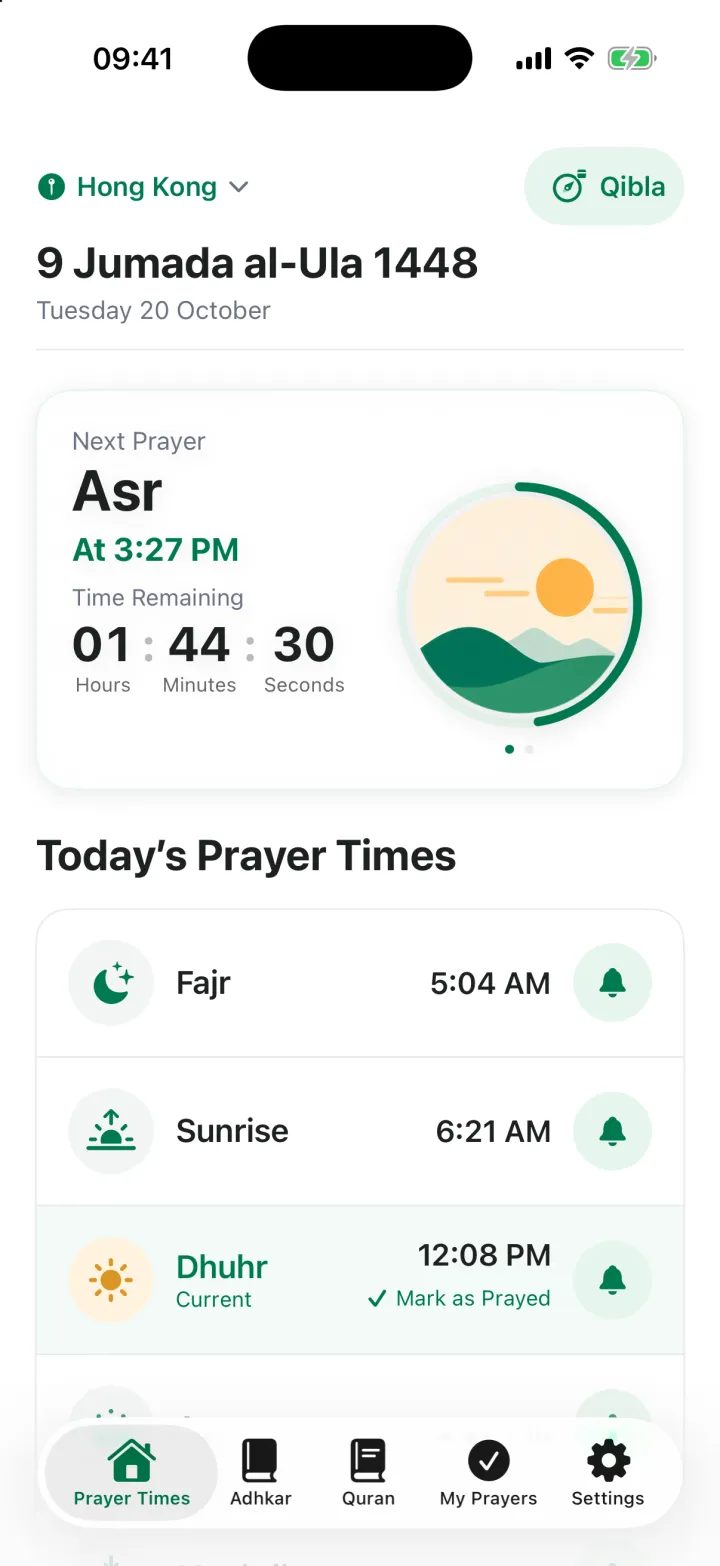
Home in English (v1.4.0). The hero card answers the glance; the timetable follows. Track only what can honestly be tracked
- Context
- A prayer tracker invites ticking boxes ahead of time, which makes the streak meaningless.
- Decision
- Prayers that haven't started yet are dimmed and marked "Not yet due". Only the five obligatory prayers count toward completion; sunrise has a reminder but no checkbox.
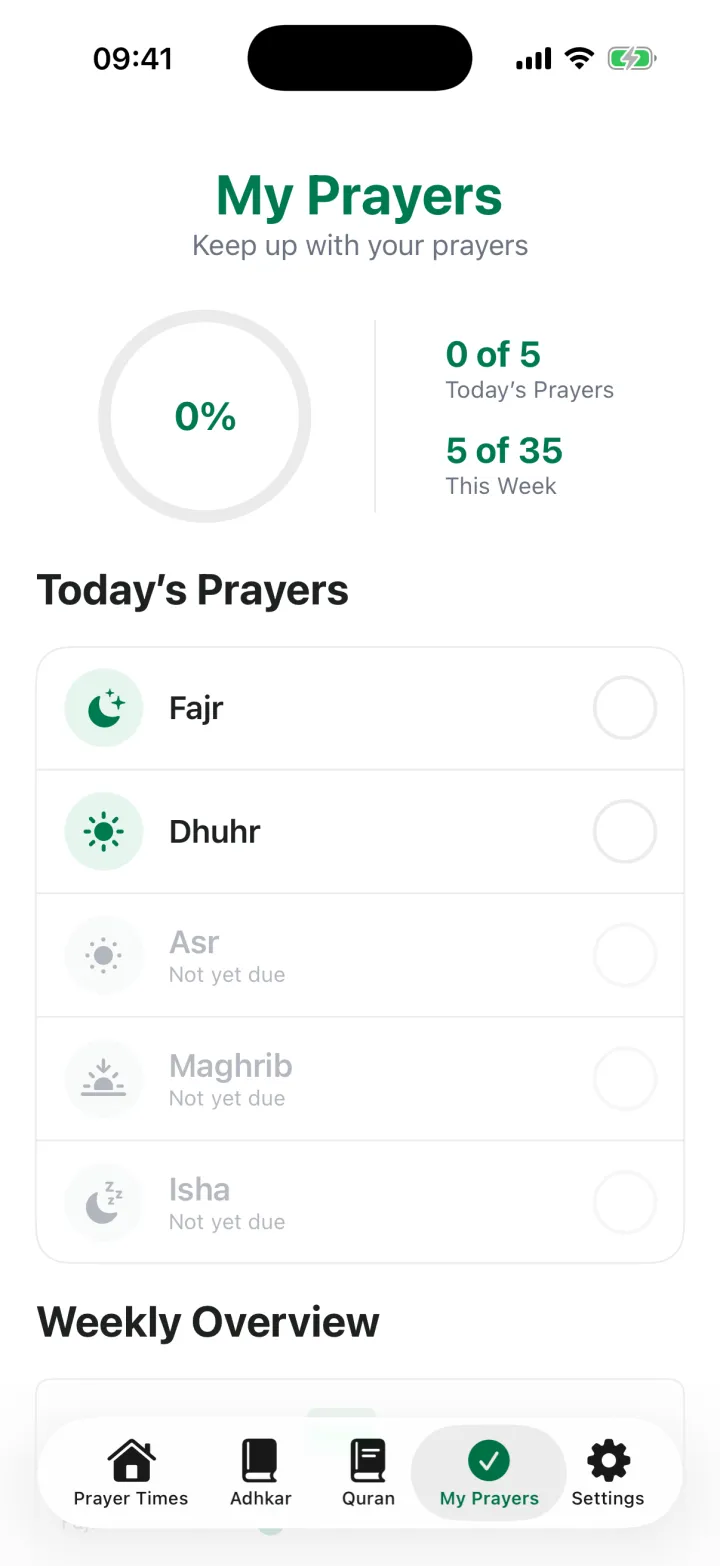
Future prayers can't be marked early. Adhkar as cards, not a long scroll
- Context
- Morning and evening adhkar are long lists where each item is repeated a set number of times. Reading and counting at once is error-prone.
- Decision
- One dhikr per swipeable card with its own counter. Morning and evening sets are separated at the data layer, and Al-Ikhlas, Al-Falaq and An-Nas each get their own card with a three-repeat counter.
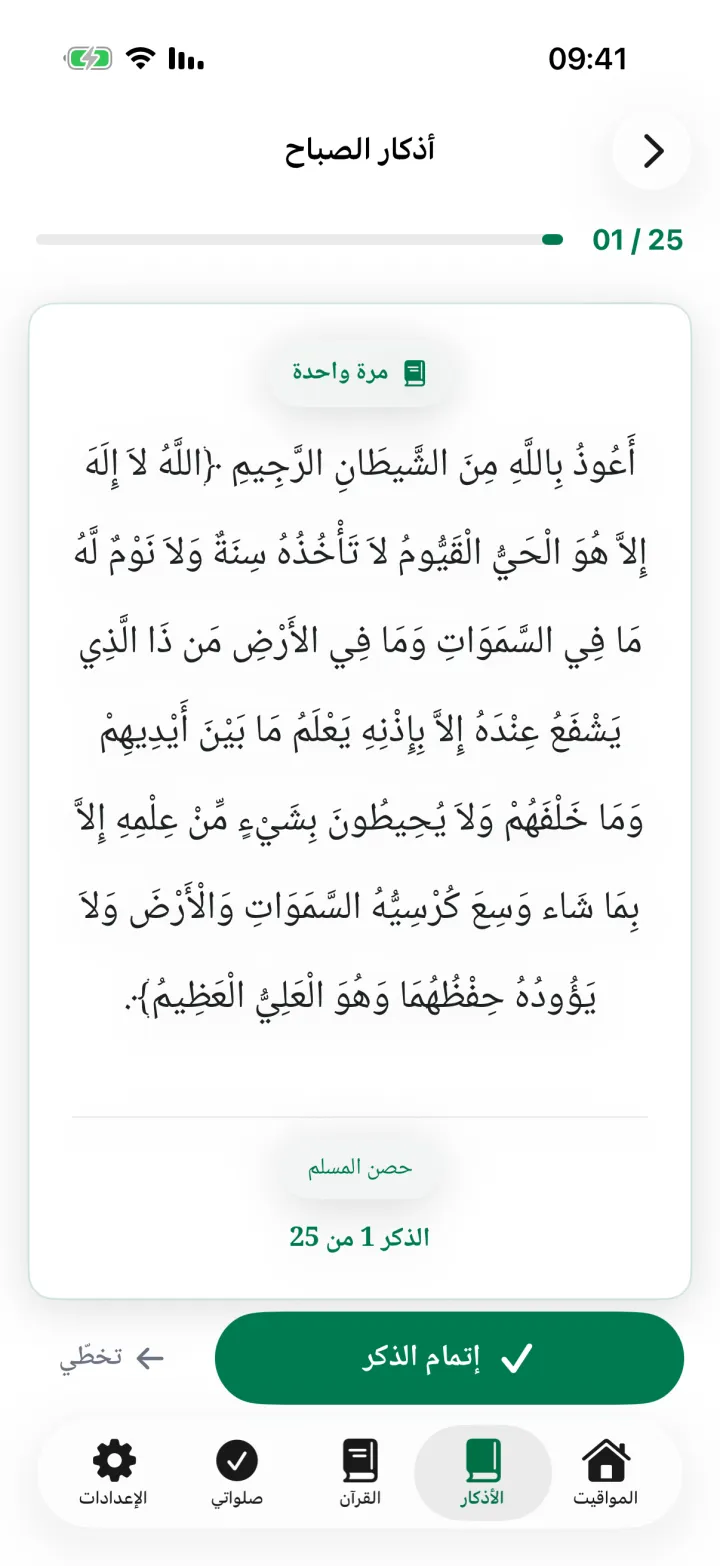
The counter on the card and the button share one state. Respect each platform's limits instead of faking parity
- Context
- On Android, Sila can silence the phone during the iqamah. iOS doesn't allow apps to change the system's silent mode.
- Decision
- Android keeps automatic silencing for a duration the user chooses. iOS offers an iqamah reminder instead, and the setting is worded for what iOS can actually do.
- Trade-off
- The two apps differ in one feature, but neither promises something it can't deliver.
A signature detail
Five prayers, five skies.
Each prayer has its own illustrated sky, from the moon over Fajr to the night of Isha. The scene sits inside the progress ring on the home screen and inside the widgets, so you can tell which part of the day you are in before reading a word.

Fajrالفجر

Dhuhrالظهر

Asrالعصر

Maghribالمغرب

Ishaالعشاء
Visual design
Restraint is the brand.
Sila uses one green, generous white space and system components. Colour is reserved for meaning: green for the current prayer and completed actions, the prayer scenes for time of day. Everything else steps back so the text can be read at arm's length, half awake.
Colour
- Sila green
#007A50Primary: current prayer, actions, completion - Mint
#E7F5EELight container behind active states - Ink
#1D201EPrimary text - Night green
#63D6AAPrimary in dark mode - Night
#101412Dark-mode background - Amber
#D99525Accent in prayer icons and scenes
Typography
مواقيت اليوم
Noto Naskh Arabic · Interface Arabic: a calm naskh that stays legible at small sizes
بِسْمِ ٱللَّهِ
Amiri Quran · The Quran only: built to place every diacritic in Uthmani text
Next prayer · Asr
System sans (SF / Roboto) · English interface, following each platform
Principles
One answer per screen
Each tab has a single job and a single primary element: the next prayer, today's adhkar, the verse you stopped at.
Colour carries meaning
Green means now or done. If something is green, it is either the current prayer or a completed act.
Native first
System navigation, symbols and type scales on each platform, so Sila feels like part of the phone.
Arabic sets the hierarchy
Layouts were designed right-to-left first. English mirrors them; the Quran and adhkar stay in Arabic in both.
Beyond the app
The glance, moved to the home screen.
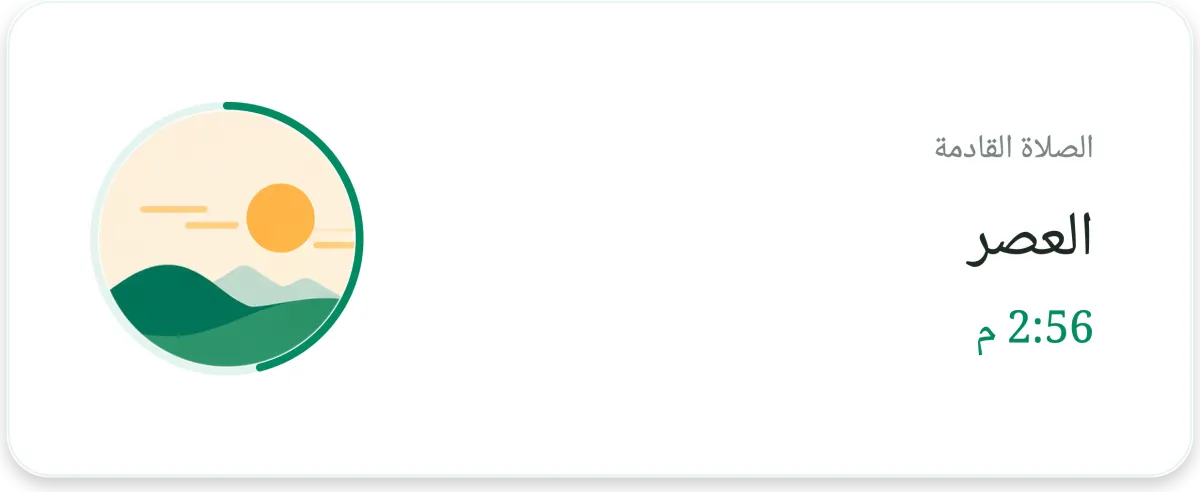
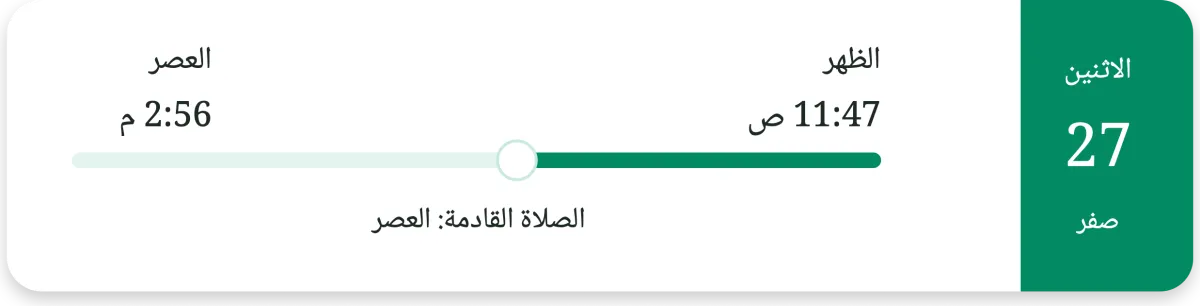
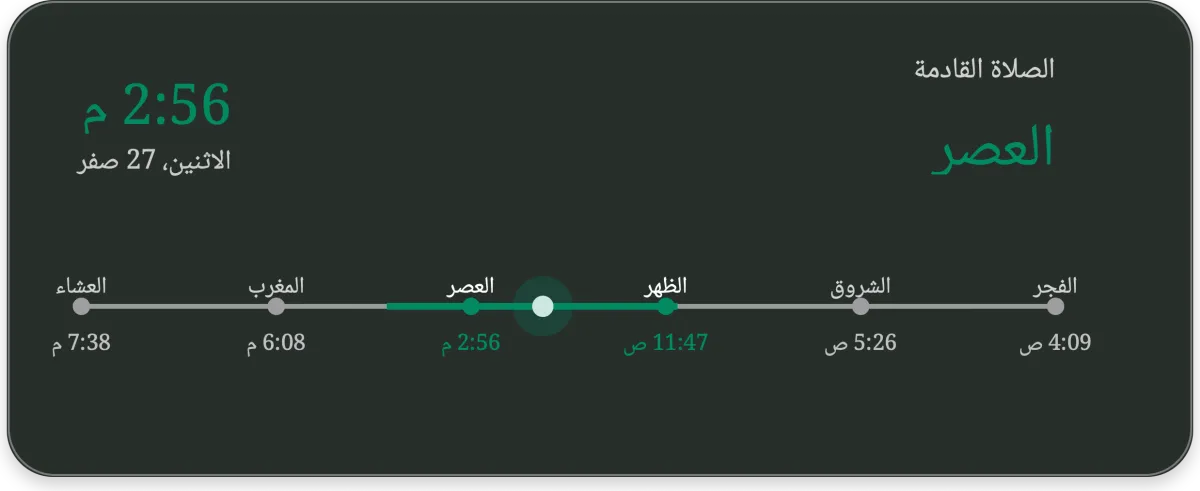
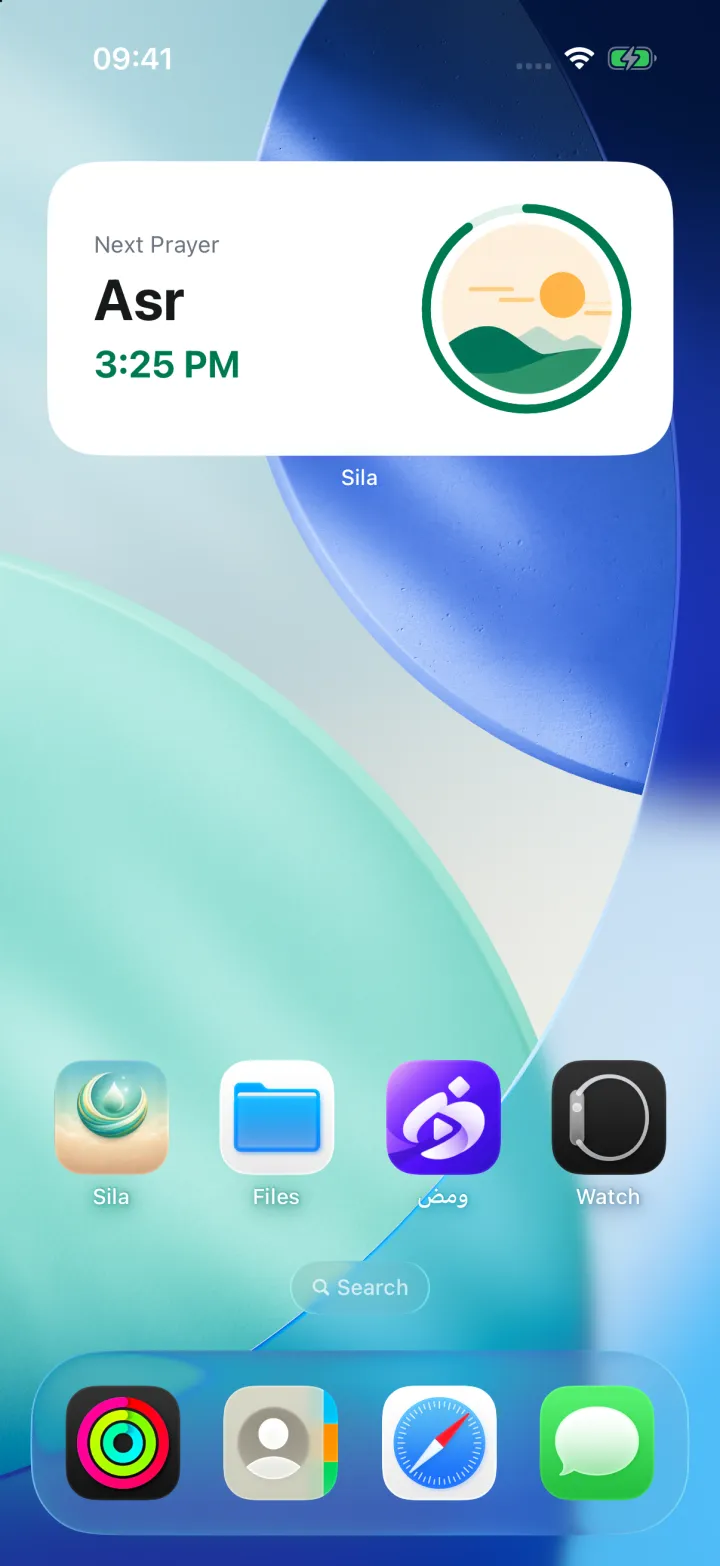
Three widget designs carry the same visual language outside the app: Horizon pairs the prayer scene with a progress ring, Ribbon shows the time left as a bar between two prayers, and Timeline places the whole day on one line. Tapping the ring or the bar shows the remaining time.
From design to production
Two native apps, one experience.
I chose native development on both platforms because Sila's most important moments happen outside the app: alarms, notifications and widgets. That is where platform conventions matter most. The cost was two codebases, which AI-assisted implementation made realistic for one person, as long as the design stayed the single source of truth.
- Android
- Native app with Material conventions and home-screen widgets
- iOS & iPadOS
- Native app with iOS conventions and WidgetKit widgets
- Content
- The complete Quran and Hisn al-Muslim adhkar, available offline
Reliability is a design requirement
A prayer reminder that arrives late breaks trust. I treated alarm and notification behaviour as part of the experience, with clear in-app guidance when a phone's settings get in the way.
Design QA against references
Key screens and all three widgets were captured on emulators and simulators and compared with the reference designs. Issues were graded by severity and fixed until none remained in the reviewed set.
One design, two platforms
Both apps share the same hierarchy, colours, illustrations and wording. Navigation, controls and type follow each platform, so Sila feels native on both.
Localisation without losing the core
The latest versions added English for menus, notifications, spoken alerts and widgets. The Quran and adhkar remain in Arabic by design.
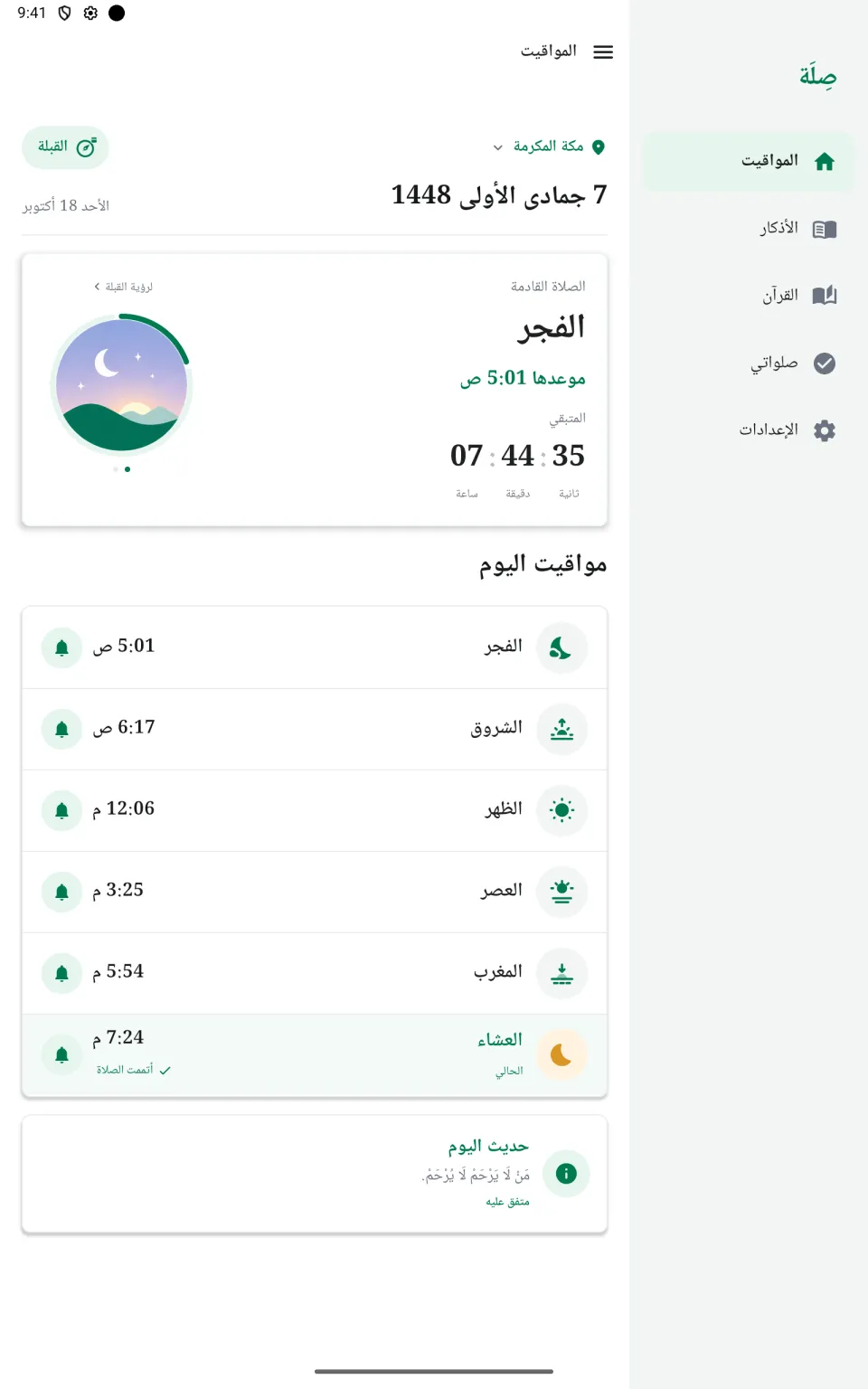
Adaptive layouts
Same product, every screen it lives on.
Launch & real-world validation
What I can measure, and what I chose not to.
Sila ships without an analytics SDK. That was a product decision, and it means I don't have active-user or retention figures to show. What follows is what the stores report publicly and what the release history shows.
- Downloads500+Google Play downloads (Play's public install bracket)Google Play listing · 20 Oct 2026
- Quality0Data types collected or shared, as declared in Play's Data safety sectionGoogle Play Data safety · 20 Oct 2026
- Delivery8Android versions shipped, 1.0 to 1.3.3; iOS is on 1.4.0Release builds in the repository · Oct 2026
Not yet available, and why
- Active users and retention: not collected, by design.
- App Store downloads: to be added from App Store Connect.
- Ratings and written reviews: not enough public reviews yet to summarise.
How it evolved
Release by release.
Aug 2026
Android foundation
Prayer times, adhkar, offline Quran and prayer tracking on Android.
Sep 2026
Reliability and widgets
City picker with per-city time zones, reminder reliability work, three widgets, and the native iOS app.
Sep 2026
Qibla and licensing
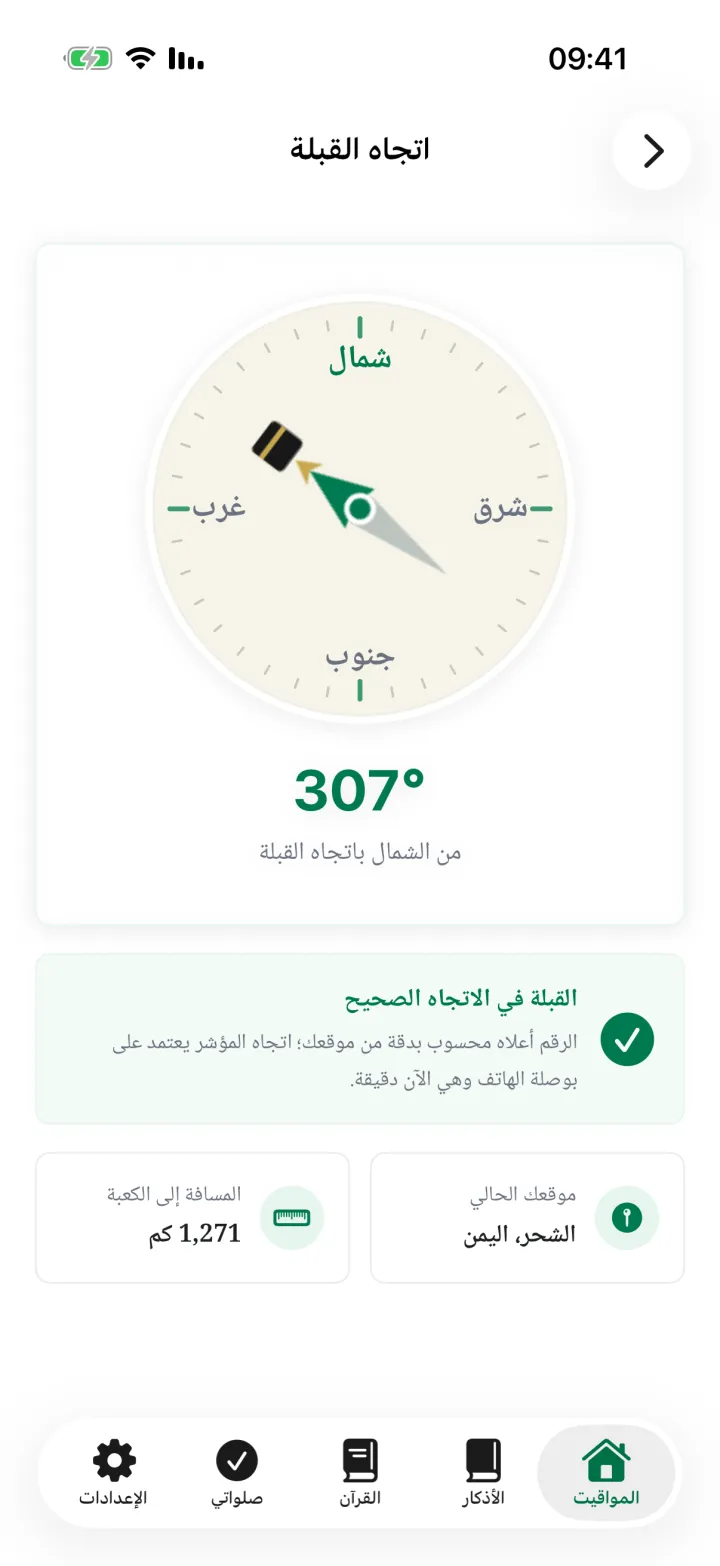
A full qibla page with calibration guidance, offline search across world cities, and adhan recordings replaced with Creative Commons sources.
Oct 2026
English and Ramadan alarms
English interface, suhoor, iftar and Fajr alarms with a stop button, and adjustable Quran text size.
Challenges & lessons
What was harder than it looked.
"Reliable" is a moving target
Every phone maker handles background alarms a little differently. The answer was a layered approach and clear in-app guidance, not a single fix.
Religious content needs provenance
Every text and recording needed a documented, licensed source. Replacing two adhan recordings mid-life cost a release, and was the right call.
Privacy limits what you can learn
Without analytics I rely on store data, direct feedback and my own use. It is slower learning, and it fits what the product promises.
Reflection
Calm is a lot of work.
Sila shows how I approach a product where trust matters more than features: a narrow core, platform-appropriate behaviour, careful content, and the discipline to leave things out.
What I learned
- The most valuable design work was removing duplicate signals until one answer remained.
- Native development paid off exactly where I expected: notifications, alarms and widgets.
- Directing AI-assisted implementation across two platforms works when the design, review and QA stay with one owner.
What I would investigate next
- Opt-in, privacy-preserving feedback inside the app.
- Testing notification reliability across more Android manufacturers.
- Deeper iPad and Android tablet layouts for Quran reading.
Designing a product people return to every day?
I help teams find the one thing a product must do well, then design and ship it with the care it deserves.